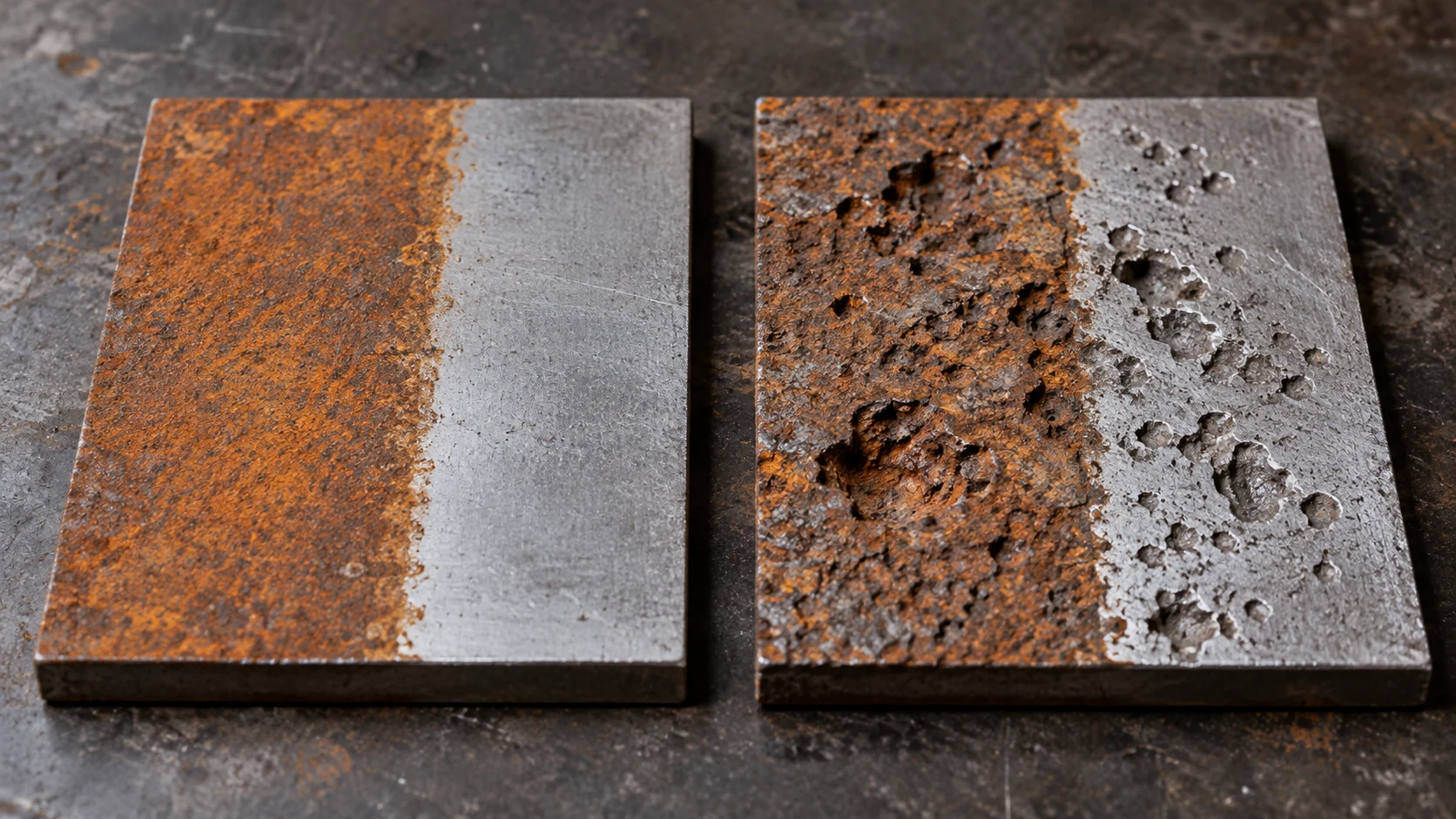
Surface rust and deep pitting are not the same
Light surface rust is corrosion concentrated near the exterior of a metal part. Pitting corrosion is localized attack that creates cavities in the material. The Association for Materials Protection and Performance (AMPP) notes that pitting can be harder to detect than uniform corrosion because corrosion products may cover the cavities. On golf cart frames, marine hardware, railings, trailers, and equipment, the true condition may not be visible until the rust and failed coating are removed.
What laser cleaning can do
With settings matched to the material and contamination, laser cleaning can remove rust, oxides, paint, and other surface layers from compatible metals. The process can expose the remaining substrate without intentionally grinding away sound metal. That makes it useful for inspection and restoration planning. Our mobile laser rust removal service begins with reviewing the metal, access, unwanted layer, and desired finish. A test area may be appropriate when the substrate or coating is uncertain.
What laser cleaning cannot do
Cleaning does not rebuild missing metal, fill pits, restore original thickness, or certify a weakened part as safe. A clean surface can reveal damage that was already present beneath the rust. Deep cavities, perforation, cracking, distortion, or heavy scaling may require measurement and evaluation by a qualified repair professional. Critical load-bearing, pressure-containing, braking, steering, lifting, or safety-related components should not be approved based on appearance alone.
Why pits deserve attention
AMPP describes pitting as a localized form of corrosion capable of producing holes in a material and warns that even limited overall metal loss can create a serious weakness. NASA’s Kennedy Space Center corrosion guidance also notes that pitting is commonly associated with chloride exposure on passive metals such as stainless steel. That matters in Broward and Palm Beach counties, where marine spray and coastal exposure can introduce chlorides. Removing the corrosion product may improve visibility, but the pit itself remains part of the metal’s condition.
A practical restoration decision
After cleaning, decide among refinishing, repair, professional inspection, or replacement. A lightly rusted decorative bracket may be a straightforward refinishing candidate. A deeply pitted suspension part, brake component, structural frame section, or heavily corroded marine fitting deserves a more conservative review. The person responsible for the repair or final use should decide whether remaining thickness and condition are acceptable. For refinishing projects, also review our guide to painting metal after laser cleaning.
How to photograph rust for an estimate
Send one photo of the entire item, several close-ups, and a side view showing scale or swelling. Add a ruler or common object for size, but do not disturb a safety-critical part just to obtain a photo. Include approximate dimensions, the metal type if known, how the item is used, whether it is near saltwater or batteries, and your location. Photos help with initial screening, but they cannot establish hidden wall thickness or structural fitness.
Examples around South Florida
Common candidates for evaluation include golf cart battery trays and frames, steel railings, machinery guards, tools, brackets, trailer parts, and accessible marine hardware. See our golf cart rust removal and marine laser cleaning pages for application-specific details. We provide mobile service across Broward and Palm Beach counties, including Fort Lauderdale, Boca Raton, and West Palm Beach.
Request a project review
Use our free estimate form to send photos, dimensions, and the planned next step. We can help determine whether laser cleaning is a reasonable part of the restoration process. If the photos suggest severe deterioration or a safety-critical component, plan for the appropriate repair specialist to evaluate the cleaned metal before it returns to service.
Technical references
This guide draws on AMPP guidance on pitting corrosion, AMPP guidance on corrosion measurement and inspection, NASA Kennedy Space Center guidance on forms of corrosion, and Laserax guidance on laser rust removal.