Start with the finish you want
Before booking rust removal, decide what happens afterward. Are you repainting a steel railing in Fort Lauderdale, refinishing brackets in Boca Raton, or handing golf cart parts to a restoration shop? Share the intended primer and topcoat with the cleaning provider. If a painter is already involved, ask them to identify the preparation requirements before work starts. That gives everyone a clear target and avoids discovering a missing preparation step when the part is ready to paint.
Where laser cleaning fits
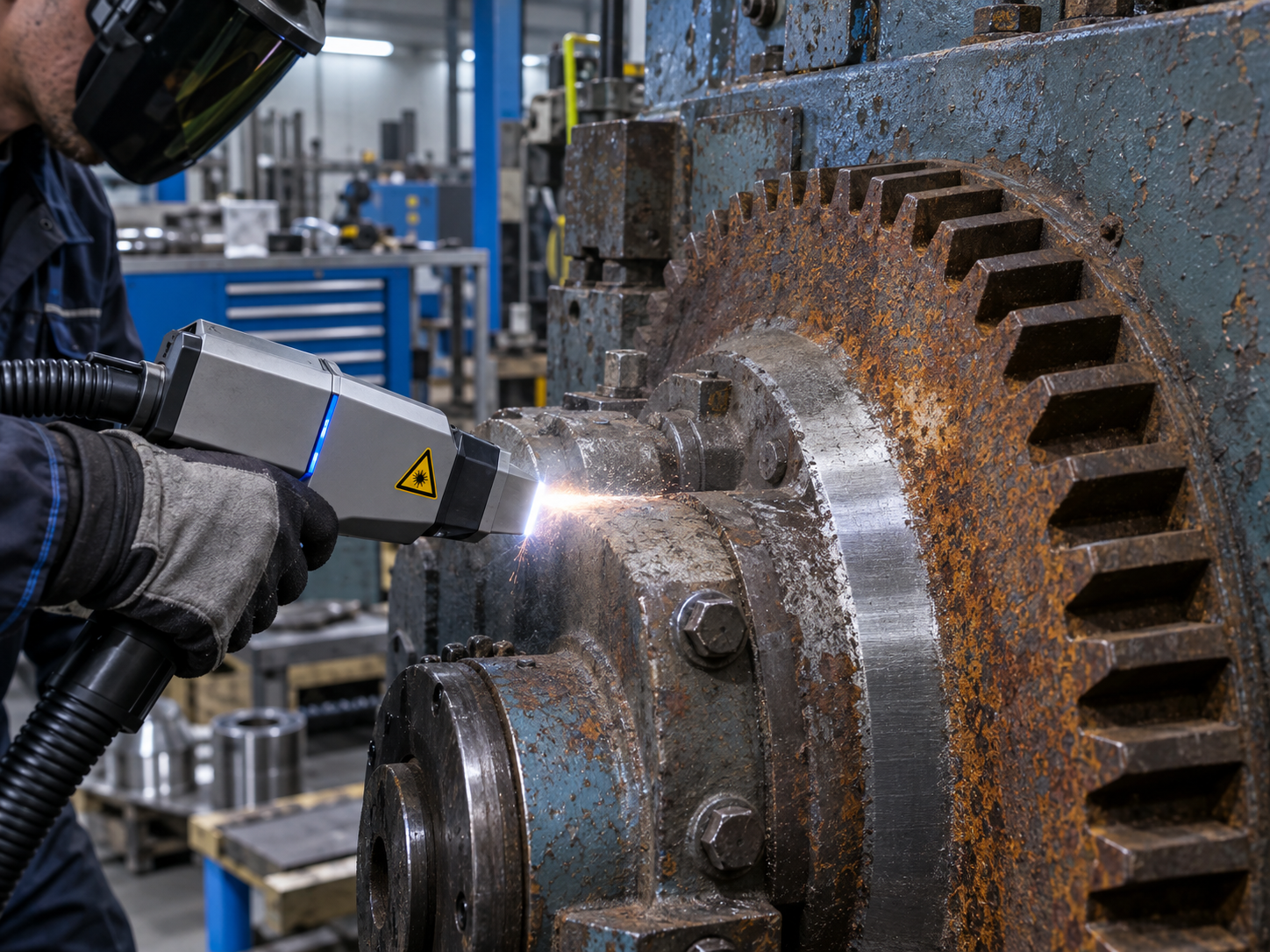
Laser cleaning can remove selected contaminants and coatings from metal, but the result depends on the equipment, settings, material, and unwanted layer. Laserax describes cleaning and surface texturing as distinct processes that require application-specific development. For your project, ask whether a trial area can be evaluated against the intended finish. Our surface preparation service starts with reviewing the substrate, access, and desired result; a visibly bright finish alone should not be treated as proof that every coating requirement has been met.
Check contamination as well as visible rust
Hempel identifies salts, oil, dust, and corrosion products as potential causes of coating problems. Its maintenance guidance also explains that solvent cleaning does not remove soluble salts. If the item has been near saltwater, tell the cleaning provider and painter. Ask how contamination will be assessed and what additional washing or testing the coating specification requires. Avoid assuming that removing visible rust confirms the surface is free of salt. See our laser rust removal service for project evaluation.
Confirm the required surface profile
Surface profile means the texture the coating needs to grip. Hempel treats profile and cleanliness as separate preparation requirements. Check the primer manufacturer’s current data sheet and have the applicator confirm that the prepared metal meets it. Depending on the coating system and measured result, another preparation step may be necessary. Choose the process around the coating requirement, rather than selecting a coating simply because the metal now looks clean.
Coordinate painting with site conditions
Before coating, the applicator should check whether conditions permit painting, including condensation risk. ISO 8502-4 addresses that assessment. Have the painter follow the product’s temperature, humidity, and surface-condition limits; a convenient appointment time does not establish that the surface is ready. For outdoor work, agree on who makes the go-or-no-go decision and what happens if conditions change. Schedule the cleaning and coating teams together so the handoff is deliberate.
Send a useful project brief
For a helpful estimate, send an overall photo, close-ups of the affected areas, approximate dimensions, the metal type if known, and your city. Include the existing finish, the planned coating, and whether the item can be moved. Mention tight access, nearby equipment, and any areas that must remain untouched. If several trades are involved, identify who will approve the cleaned surface and who will apply the finish. For a cart rebuild, our guide to cleaning golf cart parts can help frame the initial conversation.
Plan your South Florida project
South Florida Laser Cleaning offers mobile service across Broward and Palm Beach counties, including Fort Lauderdale, Boca Raton, and Boynton Beach. Send your photos and refinishing plan through our free estimate form. We can review where laser cleaning fits into the project and what needs to be coordinated with your painter.
Technical references
This guide draws on Hempel’s surface preparation guidance for maintenance and repair, Laserax’s laser process development guidance, and ISO 8502-4:2017 on condensation before painting. Consult the current data sheet and project specification for the coating you actually intend to use.