Why the joint area needs attention
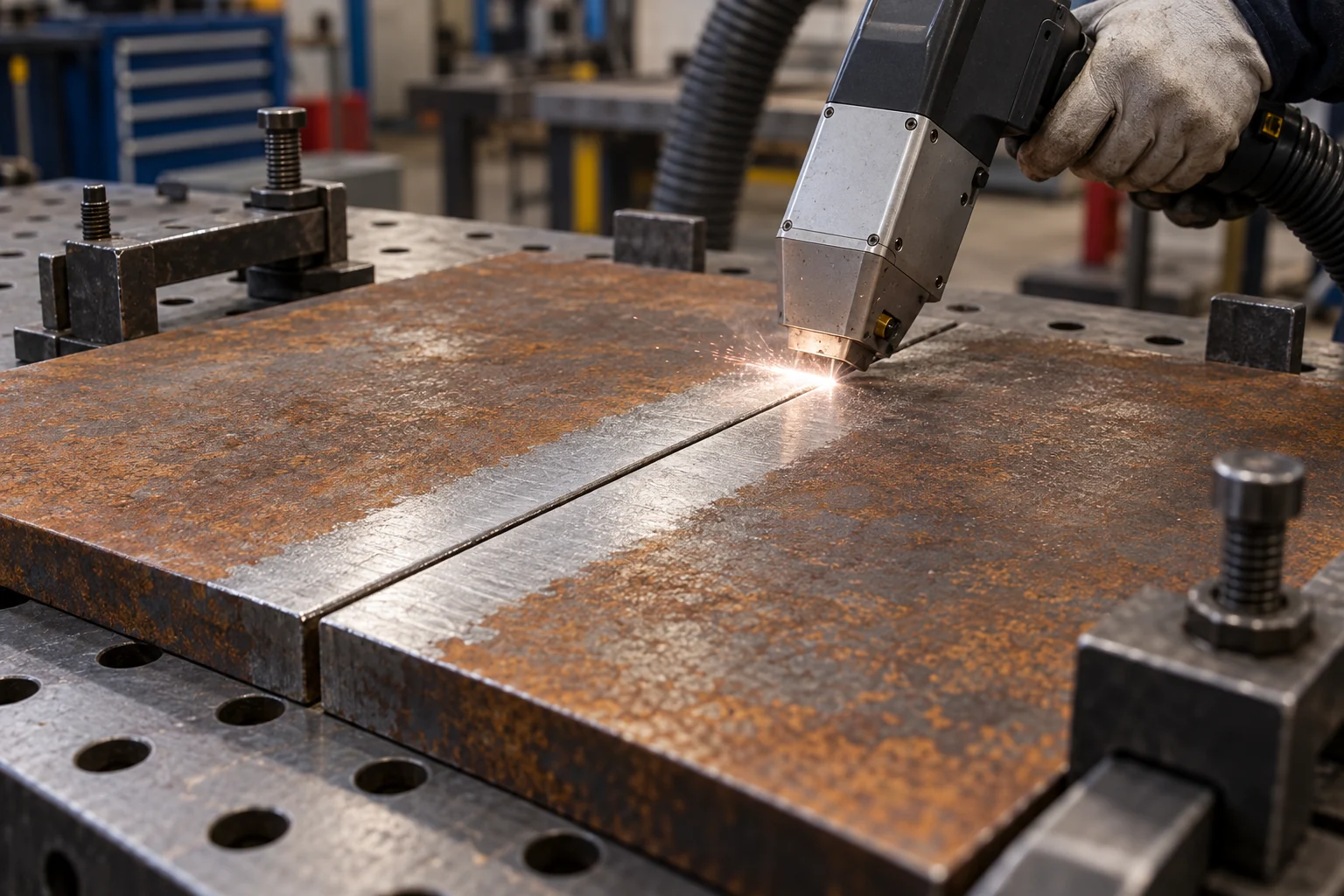
A weld starts with the condition of the base metal. Lincoln Electric advises removing excessive scale, rust, moisture, paint, oil, and grease from joint surfaces to help avoid problems such as porosity. That makes surface preparation an important planning step for corroded frames, brackets, machinery, railings, trailers, and marine components. The exact cleanliness requirement depends on the material, welding process, joint design, and applicable procedure.
Where laser cleaning can fit
Laser cleaning can selectively remove compatible coatings, rust, oxides, and other surface contaminants from a defined area. It is useful when access, detail, or control makes broad abrasive cleaning undesirable. Our mobile surface preparation service can target the weld zone and adjacent metal after the substrate, unwanted layer, and desired result are reviewed. A test area may be appropriate when the coating or alloy is uncertain.
Cleaning is not the entire weld-prep process
Laser cleaning does not create the joint design, bevel an edge, set the root opening, align parts, restore missing metal, or approve a component for service. It also does not replace the welder’s procedure or inspection requirements. The fabricator should specify how wide an area must be cleaned, what may remain, and whether additional mechanical preparation, degreasing, measurement, or testing is required. If corrosion has caused cavities or metal loss, review our guide to surface rust versus deep pitting.
Aluminum needs material-specific planning
Aluminum forms a natural oxide layer and can also carry oil, grease, moisture, or shop contamination. Lincoln Electric describes pre-weld aluminum cleaning as two operations: removing oil and grease, then removing oxide. Miller likewise emphasizes removing contamination and the oxide layer before aluminum welding. Laser cleaning may be part of that workflow, but the responsible welder should approve the preparation method and timing for the specific alloy, filler metal, and welding procedure.
Think beyond the visible weld line
Coatings and contamination may need to be removed from both sides of a joint, around the work-clamp location, and from an area wider than the final bead. Nearby sealants, wiring, rubber, glass, finished surfaces, and sensitive equipment may affect access and protection planning. Tell the cleaning provider whether the part will be welded in place or moved to a shop, and identify areas that must remain coated. This is especially important for golf cart frames and battery trays and marine metal.
What to send for an estimate
Provide an overall photo, close-ups of every planned joint, approximate dimensions, and the metal type and thickness if known. Include the existing coating or contamination, the required cleaned width, the welding process, and the fabricator’s preparation instructions. Note whether the assembly can be rotated or disassembled and whether work must occur outdoors, inside a shop, at a marina, or near operating equipment. Photos help scope access, but the welder remains responsible for accepting the prepared joint.
Mobile service in Broward and Palm Beach counties
South Florida Laser Cleaning can evaluate weld-preparation projects at shops, facilities, marinas, and accessible jobsites throughout Broward and Palm Beach counties, including Fort Lauderdale, Pompano Beach, Boca Raton, and West Palm Beach. Use our free estimate form to send photos and the welder’s requested preparation area.
Technical references
This guide draws on Lincoln Electric guidance on cleaning joints before welding, Lincoln Electric guidance on aluminum pre-weld cleaning, Miller guidance on aluminum preparation, and Laserax information on laser cleaning for welding applications. Follow the project’s approved welding procedure and the responsible fabricator’s requirements.